
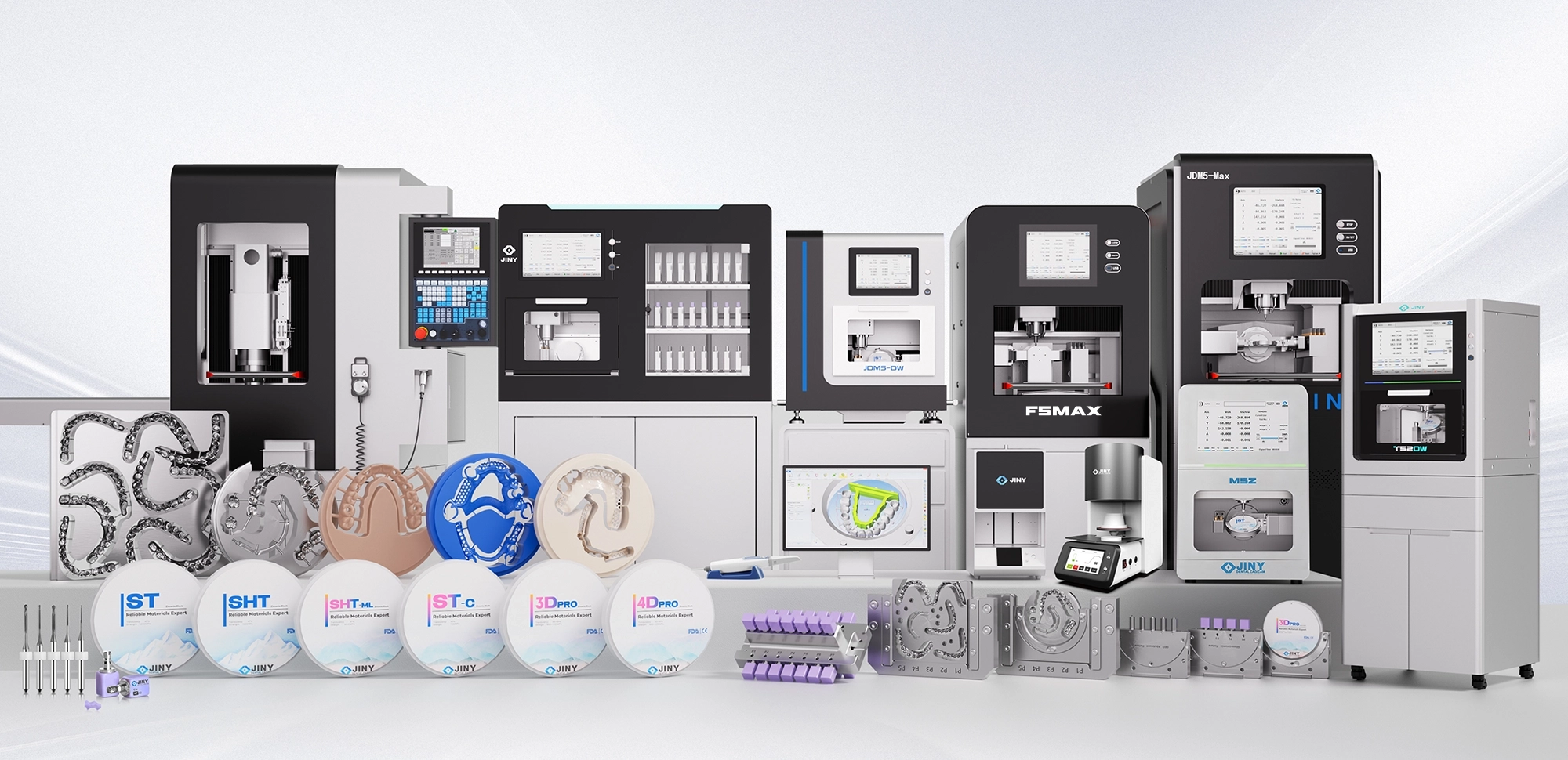
Wet Milling vs Dry Milling: How to Choose a Dental Milling Machine
Choosing the right dental milling machine is an important decision for dental laboratories, clinics and digital dental production centers. In CAD/CAM dentistry, wet milling and dry milling are used for different materials, restoration types and production workflows.
The main difference between wet milling and dry milling is whether coolant or water is used during the milling process. But for dental labs, the real question is usually more practical:
Which dental milling machine should I choose for zirconia, PMMA, PEEK, wax, glass ceramics, titanium, CoCr or premilled abutments?
This guide explains the difference between wet milling and dry milling, compares the suitable materials for each workflow, and helps you choose the right JINY dental milling machine based on your daily production needs.
Quick Answer: Wet Milling vs Dry Milling
Dry dental milling is usually used for materials such as zirconia, PMMA, PEEK and wax. It is efficient, clean and suitable for high-volume crown and bridge production.
Wet dental milling uses coolant or water during machining. It is usually required for glass ceramics, lithium disilicate, titanium, CoCr, premilled abutments and other hard or heat-sensitive dental materials.
A wet and dry dental milling machine can support both workflows, making it suitable for labs that want to process a wider range of CAD/CAM materials with one machine.
Wet vs Dry Dental Milling Machine Comparison
| Comparison Item | Dry Dental Milling | Wet Dental Milling | Wet & Dry Dental Milling |
|---|---|---|---|
| Milling method | No coolant during milling | Uses water or coolant | Supports both dry and wet workflows |
| Common materials | Zirconia, PMMA, PEEK, Wax | Glass ceramics, Titanium, CoCr, Premilled abutment | Zirconia, PMMA, PEEK, Wax, Glass ceramics, Titanium, CoCr, Abutment |
| Best for | High-volume crown and bridge production | Ceramic, implant and metal restorations | Multi-material dental labs |
| Maintenance focus | Dust control and chamber cleaning | Water tank, coolant and filter cleaning | Both dust and water system maintenance |
| Suitable users | Zirconia labs, crown and bridge labs | Clinics, implant labs, ceramic labs | Growing labs and production centers |
| Recommended JINY machines | JDM5Z, M5Z | JDM5T Pro, JDM5 MAX | JDM5DW, M5DW, JDM5DC |
What Is Dry Dental Milling?
Dry dental milling is a milling process that does not use water or coolant during machining. It is commonly used for dental CAD/CAM materials that can be milled efficiently in a dry environment.
Common dry milling materials include:
-
Zirconia
-
PMMA
-
PEEK
-
Wax
-
Some other dry dental CAD/CAM discs
Dry milling is widely used in dental laboratories because it is efficient, clean and suitable for high-volume production. For example, zirconia restorations are usually milled in a dry environment before sintering. This workflow helps labs produce crowns, bridges, frameworks and other restorations with stable accuracy and predictable results.
If your dental lab mainly produces zirconia crowns, PMMA temporary restorations, PEEK frameworks or wax patterns, a 5-axis dry dental milling machine is usually a practical and cost-effective choice.
For example, the JDM5Z 5-Axis Dry Dental Milling Machine is suitable for zirconia, PMMA, PEEK and wax milling. For clinics or smaller labs that need a compact dry milling solution, the M5Z 5-Axis Dry Dental Milling Machine can also support daily dry milling production.
What Is Wet Dental Milling?
Wet dental milling uses water or coolant during the milling process. This method is commonly used for harder, denser or heat-sensitive materials.
Common wet milling materials include:
-
Glass ceramics
-
Lithium disilicate
-
Titanium blocks
-
Titanium premilled abutments
-
CoCr
-
Composite resin
-
Implant-related dental materials
The coolant helps reduce heat, protect tools and improve the surface quality of the restoration. Wet milling is especially important when milling materials that may crack, overheat or require a smoother surface finish during processing.
For clinics and dental labs that produce glass ceramic restorations, custom abutments, titanium restorations or implant components, wet milling capability is often necessary.
For example, the JDM5T Pro 5-Axis Metal Dental Milling Machine is suitable for titanium, cobalt chrome, premilled abutments, glass ceramics and other metal-related dental applications. For implant labs that need stronger material coverage, the JDM5 MAX 5-Axis Implant Dental Milling Machine is designed for advanced implant and metal milling workflows.
What Is a Wet and Dry Dental Milling Machine?
A wet and dry dental milling machine supports both dry milling and wet milling. This type of machine is suitable for dental labs that want more flexibility and do not want to be limited to only one material group.
A wet and dry dental milling machine can help process materials such as:
-
Zirconia
-
PMMA
-
PEEK
-
Wax
-
Glass ceramics
-
Composite resin
-
Titanium block
-
Premilled abutment
-
CoCr
For growing dental labs, a wet and dry milling machine can be a long-term investment because it allows the lab to start with zirconia and PMMA, then expand into glass ceramics, titanium, abutments and implant restorations later.
The JDM5DW 5-Axis Wet and Dry Dental Milling Machine is suitable for labs that need a wide material range, including titanium block, abutment, glass ceramics, zirconia, composites, CoCr, PMMA, PEEK and wax.
For clinics and smaller labs that need a compact dry and wet milling solution, the M5DW 5-Axis Wet and Dry Dental Milling Machine is suitable for glass ceramics, abutments, zirconia, PMMA, PEEK and wax.
For high-volume production, the JDM5DC Auto Disc Changer Dental Milling Machine supports dry milling and optional wet milling, helping dental labs improve efficiency and reduce manual loading.
Material Compatibility: The Most Important Factor
When choosing a dental milling machine, material compatibility should be the first factor to consider. Different dental materials require different milling conditions, tools and machine structures.
If your main materials are zirconia, PMMA, PEEK and wax, a dry dental milling machine may be enough for daily production.
If you need to mill glass ceramics, titanium blocks, CoCr or premilled abutments, you should choose a wet dental milling machine or a wet and dry dental milling machine.
If your lab wants to process many materials in one production system, a wet and dry dental milling machine provides better flexibility.
Dental Milling Materials and Recommended JINY Machines
| Dental Milling Material | Recommended Milling Type | Recommended JINY Dental Milling Machine | Common Applications |
|---|---|---|---|
| Zirconia | Dry milling | JDM5Z 5-Axis Dry Dental Milling Machine | Crowns, bridges, full-contour restorations |
| PMMA | Dry milling | M5Z 5-Axis Dry Dental Milling Machine | Temporary crowns, temporary bridges, denture try-ins |
| PEEK | Dry or wet/dry milling | JDM5DW 5-Axis Wet and Dry Dental Milling Machine | Frameworks, long-term temporary restorations |
| Wax | Dry milling | JDM5DC Auto Disc Changer Dental Milling Machine | Casting patterns, diagnostic wax-ups |
| Glass ceramics | Wet milling | M5DW 5-Axis Wet and Dry Dental Milling Machine | Inlays, onlays, veneers, crowns |
| Lithium disilicate | Wet milling | JDM4T Wet Milling Machine | Aesthetic crowns, veneers, ceramic restorations |
| Composite resin | Wet or wet/dry milling | JDM5 MAX Implant Dental Milling Machine | Inlays, onlays, crowns, aesthetic restorations |
| Titanium block | Wet milling | JDM5T Pro Metal Dental Milling Machine | Titanium crowns, implant bridges, implant bars |
| Premilled abutment | Wet milling | JDM5DW Wet and Dry Dental Milling Machine | Custom implant abutments |
| CoCr | Wet milling | JDM5 MAX 5-Axis Implant Dental Milling Machine | Metal frameworks, implant bars, implant restorations |
| Titanium rod | Oil milling / turn-mill processing | T52CX 5-Axis Turn-Mill Dental Milling Machine | One-step titanium abutment production |
Dry Milling for Zirconia, PMMA, PEEK and Wax
Dry dental milling is often preferred by dental labs that focus on daily crown and bridge production. It is especially suitable for zirconia, PMMA, PEEK and wax materials.
Zirconia Dry Milling
Zirconia is one of the most common materials in dental CAD/CAM production. It is widely used for crowns, bridges, full-contour restorations and implant-supported restorations.
For labs mainly producing zirconia restorations, the JDM5Z dry dental milling machine for zirconia is a suitable option. It supports zirconia, PMMA, PEEK and wax, making it practical for daily dental lab production.
PMMA Dry Milling
PMMA is commonly used for temporary crowns, temporary bridges, denture try-ins and provisional restorations. It is easy to process and usually suitable for dry milling.
For PMMA, the M5Z compact dry dental milling machine is suitable for clinics and smaller labs that need a simple dry milling workflow for PMMA, zirconia, PEEK and wax.
PEEK Milling
PEEK is used for frameworks, long-term temporary restorations and selected implant-related applications. It can be part of a dry or wet/dry milling workflow depending on the machine, tools and material system.
For labs that want to mill PEEK while keeping future flexibility for glass ceramics, titanium and abutments, the JDM5DW wet and dry dental milling machine is a strong option.
Wax Milling
Wax is mainly used for casting patterns, diagnostic wax-ups and certain laboratory workflows. It is easy to mill, but high-volume labs still need stable accuracy and efficient operation.
For labs that need batch production and automatic disc changing, the JDM5DC dental milling machine with auto disc changer can help reduce manual loading and improve workflow efficiency.
Wet Milling for Glass Ceramics, Titanium, CoCr and Abutments
Wet dental milling is suitable for materials that require coolant during machining. It is often used for glass ceramics, lithium disilicate, titanium blocks, premilled abutments, CoCr and other advanced dental CAD/CAM materials.
Glass Ceramic Wet Milling
Glass ceramics are widely used for aesthetic restorations such as veneers, inlays, onlays and crowns. These materials usually require wet milling because coolant helps reduce heat and supports better surface quality.
For glass ceramics, the M5DW wet and dry dental milling machine is a suitable choice for clinics and labs that want one compact machine for both dry and wet materials.
Lithium Disilicate Wet Milling
Lithium disilicate is often used for aesthetic crowns, veneers, inlays and onlays. It is usually milled in a wet workflow.
For labs focused on ceramic and premilled abutment milling, the JDM4T wet dental milling machine is suitable for glass ceramics, titanium premilled abutments and related wet milling applications.
Titanium Milling
Titanium is commonly used for implant restorations, titanium crowns, custom abutments, implant bridges and implant bars. Titanium milling requires a stable machine structure, strong spindle performance, suitable coolant and proper milling tools.
For titanium and CoCr metal milling, the JDM5T Pro dental titanium and CoCr milling machine is designed for wet metal milling applications, including titanium restorations, implant bridges, implant bars and premilled abutments.
CoCr Milling
CoCr is used for metal frameworks, implant bars, implant bridges and high-strength dental restorations. It requires a strong and stable wet milling system.
For advanced implant and metal cases, the JDM5 MAX implant dental milling machine is suitable for titanium block, premilled abutment, glass ceramics, composites, CoCr, PEEK, PMMA and wax.
Titanium Rod Abutment Milling
For dental labs or production centers that want to produce titanium abutments directly from titanium rods, a turn-mill dental milling machine can improve efficiency.
The T52CX 5-Axis Turn-Mill Dental Milling Machine is designed for titanium rod processing and one-step abutment production.
Restoration Types and Clinical Applications
Different restoration types also influence the choice between wet and dry milling.
Dry milling is commonly used for:
-
Zirconia crowns
-
Zirconia bridges
-
Full-contour restorations
-
PMMA temporary restorations
-
PEEK frameworks
-
Wax patterns
-
Daily crown and bridge production
Wet milling is more suitable for:
-
Glass ceramic crowns
-
Lithium disilicate veneers
-
Inlays and onlays
-
Titanium crowns
-
Custom abutments
-
Premilled abutments
-
Implant bars
-
Implant bridges
-
CoCr frameworks
If your business includes both daily crown and bridge production and implant-related restorations, a wet and dry dental milling machine can provide better production coverage.
For example, a lab that mainly mills zirconia today but plans to add titanium abutments and glass ceramics later can consider the JDM5DW wet/dry dental milling machine or the JDM5DC dry/wet dental milling machine with disc changer.
Production Efficiency and Workflow
Production efficiency is another important factor when choosing a dental milling machine.
Dry milling is usually efficient for zirconia, PMMA, PEEK and wax because it avoids water management during processing. This can make the workflow cleaner and easier for high-volume production.
Wet milling requires coolant circulation, water tank cleaning, filter maintenance and chamber cleaning. However, it allows the machine to process materials that dry milling cannot handle properly, such as glass ceramics, titanium and CoCr.
A wet and dry milling system can help labs improve workflow flexibility. Instead of using separate machines for different materials, one machine can support more production tasks depending on the machine design and material compatibility.
For larger dental labs, automatic disc changing can also improve efficiency. The JDM5DC Auto Disc Changer Dental Milling Machine is suitable for labs that need continuous production and want to reduce manual operation.
Maintenance Requirements
Dry milling machines usually require regular dust management. Zirconia, PMMA, PEEK and wax milling can generate fine dust or debris, so proper suction and cleaning are important for machine performance and long-term stability.
Wet milling machines require cleaning of the water tank, coolant system, filters and milling chamber. If the coolant system is not maintained properly, residue may affect milling quality and machine reliability.
Wet and dry dental milling machines require both dust management and water system maintenance. However, they offer more material flexibility, which can be valuable for labs that want to expand their production range.
When choosing a dental milling machine, you should consider not only the purchase cost, but also daily cleaning, maintenance time, tool replacement, operator workflow and future material requirements.
When Should You Choose a Dry Dental Milling Machine?
You should choose a dry dental milling machine if your production is mainly focused on:
-
Zirconia
-
PMMA
-
PEEK
-
Wax
-
Crown and bridge production
-
Temporary restorations
-
High-volume daily lab work
Dry milling is often preferred by labs that want a simple workflow, fast production and lower maintenance complexity.
Recommended JINY dry milling machines:
If your lab does not require glass ceramic, titanium or CoCr milling, a dry dental milling machine may be the right solution.
When Should You Choose a Wet Dental Milling Machine?
You should choose a wet dental milling machine if you need to mill:
-
Glass ceramics
-
Lithium disilicate
-
Titanium blocks
-
Titanium premilled abutments
-
CoCr
-
Implant bars
-
Implant bridges
-
Custom abutments
Wet milling capability is important for labs and clinics that produce implant-related restorations, ceramic restorations or metal restorations.
Recommended JINY wet milling and metal milling machines:
If your workflow includes custom abutments, titanium restorations or advanced implant cases, wet milling capability should be considered essential.
When Should You Choose a Wet and Dry Dental Milling Machine?
A wet and dry dental milling machine is the best choice when you need maximum flexibility. It allows dental labs to process both dry materials and wet materials, making it suitable for a broader range of CAD/CAM applications.
Choose a wet and dry dental milling machine if you want to process:
-
Zirconia
-
PMMA
-
PEEK
-
Wax
-
Glass ceramics
-
Composite resin
-
Titanium
-
Premilled abutments
-
CoCr
This type of machine is especially useful for laboratories that want to expand from zirconia production to glass ceramics, titanium, abutments and other advanced restorations. It can also help reduce the need for multiple machines and improve production flexibility.
Recommended JINY wet and dry dental milling machines:
For growing dental labs, a wet and dry system can be a long-term investment because it supports more materials, more applications and more complex production requirements.
How to Choose the Right JINY Dental Milling Machine
Before choosing a dental milling machine, consider the following points.
1. Check Your Main Milling Materials
Material compatibility determines whether you need dry milling, wet milling or both.
If your main materials are zirconia, PMMA, PEEK and wax, choose a dry milling machine such as JDM5Z or M5Z.
If your materials include glass ceramics, titanium, CoCr or premilled abutments, choose a wet or wet/dry machine such as JDM5DW, M5DW or JDM5 MAX.
2. Consider Your Restoration Types
Crowns, bridges, veneers, abutments, implant bars and temporary restorations may require different machine capabilities.
For daily zirconia crowns and bridges, a dry dental milling machine is usually enough.
For titanium abutments, CoCr frameworks, implant bars and implant bridges, a stronger wet milling or metal milling machine is more suitable.
3. Evaluate Your Daily Production Volume
Small clinics may prefer compact machines with simple operation.
Medium and large labs may need stronger spindle power, larger tool capacity, automatic tool changing or automatic disc changing.
If your lab needs continuous production, the JDM5DC auto disc changer dental milling machine can help improve workflow efficiency.
4. Think About Future Business Growth
If your lab only mills zirconia today but plans to produce glass ceramics, titanium abutments or implant restorations later, a wet and dry dental milling machine may provide better long-term value.
A flexible system such as JDM5DW allows your lab to expand material capability without immediately buying separate machines for each material group.
Recommended JINY Dental Milling Solutions
For Zirconia Crown and Bridge Labs
If your lab mainly mills zirconia, PMMA, PEEK and wax, choose the JDM5Z 5-Axis Dry Dental Milling Machine. It is suitable for high-volume dry milling production and daily crown and bridge workflows.
For Clinics and Small Labs
If you need a compact dry milling solution for zirconia, PMMA, PEEK and wax, choose the M5Z 5-Axis Dry Dental Milling Machine.
If you need both dry and wet milling in a compact machine, choose the M5DW 5-Axis Wet and Dry Dental Milling Machine.
For Multi-Material Dental Labs
If you want one machine for zirconia, PMMA, PEEK, wax, glass ceramics, titanium, CoCr and premilled abutments, choose the JDM5DW 5-Axis Wet and Dry Dental Milling Machine.
For High-Volume Production Centers
If your lab needs automatic disc changing, continuous production and reduced manual operation, choose the JDM5DC Auto Disc Changer Dental Milling Machine.
For Implant and Metal Milling Labs
If your lab focuses on titanium blocks, CoCr, premilled abutments, implant bars and implant bridges, choose the JDM5T Pro 5-Axis Metal Dental Milling Machine or the JDM5 MAX 5-Axis Implant Dental Milling Machine.
For Titanium Rod Abutment Production
If you want to produce titanium abutments directly from titanium rods, choose the T52CX 5-Axis Turn-Mill Dental Milling Machine.
FAQ: Wet Milling vs Dry Milling Dental Milling Machine
What is the difference between wet milling and dry milling in dentistry?
The main difference is whether coolant or water is used during the milling process. Dry milling does not use coolant and is commonly used for zirconia, PMMA, PEEK and wax. Wet milling uses coolant and is commonly used for glass ceramics, lithium disilicate, titanium, CoCr and premilled abutments.
Which dental materials are suitable for dry milling?
Dry milling is commonly used for zirconia, PMMA, PEEK and wax. These materials are suitable for dental labs that mainly produce crowns, bridges, frameworks, temporary restorations and wax patterns.
Which dental materials require wet milling?
Wet milling is usually recommended for glass ceramics, lithium disilicate, titanium blocks, CoCr, premilled abutments and other materials that require coolant during machining.
Which JINY dental milling machine is best for zirconia?
For zirconia, the JDM5Z 5-Axis Dry Dental Milling Machine is a suitable choice for dental labs. For clinics or smaller labs, the M5Z 5-Axis Dry Dental Milling Machine can also be used for zirconia, PMMA, PEEK and wax.
Which JINY dental milling machine is suitable for wet and dry milling?
The JDM5DW 5-Axis Wet and Dry Dental Milling Machine is suitable for labs that need wide material compatibility. The M5DW 5-Axis Wet and Dry Dental Milling Machine is suitable for clinics and smaller labs that need a compact wet and dry workflow.
Can one dental milling machine mill both zirconia and titanium?
Yes, a wet and dry dental milling machine can support both zirconia and titanium if the machine configuration, fixtures, tools and CAM strategy are suitable. For example, JDM5DW supports both dry and wet materials, including zirconia and titanium block.
What is the best dental milling machine for titanium and CoCr?
For titanium and CoCr, a stronger wet milling or metal milling machine is recommended. The JDM5T Pro is suitable for titanium and cobalt chrome milling. The JDM5 MAX is suitable for implant and metal applications such as titanium block, premilled abutment, CoCr and implant bars.
Should a dental lab buy a dry, wet or wet and dry dental milling machine?
If your lab mainly mills zirconia, PMMA, PEEK and wax, choose a dry dental milling machine. If your lab mainly mills glass ceramics, titanium, CoCr or premilled abutments, choose a wet dental milling machine. If your lab wants to process many different CAD/CAM materials, choose a wet and dry dental milling machine.
Conclusion
Wet milling and dry milling are both important in digital dental production. Dry milling is efficient for zirconia, PMMA, PEEK and wax, while wet milling is necessary for materials such as glass ceramics, titanium, CoCr and premilled abutments.
The best dental milling machine depends on your materials, restoration types, production volume and future business needs.
If your lab focuses on zirconia crowns and bridges, a dry dental milling machine such as JDM5Z or M5Z can be a practical choice.
If your lab needs more material flexibility, a wet and dry dental milling machine such as JDM5DW, M5DW or JDM5DC can support more CAD/CAM workflows.
If your lab focuses on titanium, CoCr, implant bars, implant bridges or titanium abutments, a metal or implant dental milling machine such as JDM5T Pro, JDM5 MAX or T52CX may be more suitable.
Choosing the right dental milling machine helps improve production efficiency, restoration quality and workflow stability for modern dental laboratories and clinics.
Not sure which JINY dental milling machine is suitable for your lab? Contact JINY Dental and tell us your milling materials, restoration types and production volume. Our team will help you choose the right wet, dry or wet and dry dental milling solution.